Pakistan Army Deployment in Khyber Pakhtunkhwa: KP Emergency and Governor’s Rule, PTI Long March and Article 245 Explained
What happened in KP, why the protest march began, what the federal government says, how PTI responded, and what Pakistan’s Constitution says about emergency powers and military assistance to civilian authorities.
Reading time: 15–20 minutes
For CSS, PMS, FPSC, PPSC and SPSC
At a glance: What has been reported?
- ▹On 11 October 2026, Pakistan’s federal government announced emergency and governor’s rule in Khyber Pakhtunkhwa under Articles 232 and 234, following approval by President Asif Ali Zardari on the federal cabinet’s recommendation.
- ▹The federal government separately authorised Pakistan Army troops and assets to act in aid of civil power under Article 245.
- ▹The PTI-led protest march, headed by KP Chief Minister Sohail Afridi, had called for the release of former prime minister Imran Khan.
- ▹Federal officials cited security and counterterrorism concerns. PTI rejected the decision and argued that it undermined the province’s elected mandate and autonomy.
- ▹These are reported developments as of 12 October 2026. The scope and legal consequences of the measures must be assessed against the actual official proclamations, the Constitution and any subsequent court decisions.
Key reporting: Dawn — Emergency and governor’s rule · Dawn — Army deployment in KP
Introduction: Why is Khyber Pakhtunkhwa in the news?
Khyber Pakhtunkhwa (KP) is at the centre of a major political and constitutional dispute following the federal government’s announcement of emergency and governor’s rule on 11 October 2026. The decision came amid tensions between the federal government led by Prime Minister Shehbaz Sharif and the provincial administration associated with Pakistan Tehreek-e-Insaf (PTI), the party founded by former prime minister Imran Khan.
The developments unfolded alongside a PTI protest march led by KP Chief Minister Sohail Afridi. The march’s central political demand was the release of Imran Khan, who has been imprisoned since 2023 and faces multiple legal cases. PTI disputes the fairness and political context of proceedings against him, while the federal government maintains that legal matters must be dealt with through the relevant legal and judicial processes.
At the same time, federal and provincial authorities have disagreed over the security situation in KP, the response to militant violence, counterterrorism policy and the level of coordination between Islamabad and the provincial administration.
On 11 October, the President House announced the approval of emergency and governor’s rule under Articles 232 and 234 of the Constitution. A separate Interior Ministry notification authorised army deployment in aid of civil power under Article 245. These are distinct constitutional measures, and they should not be confused with one another.
The situation raises difficult questions about public security, elected government, provincial autonomy, federal authority, fundamental rights and the constitutional limits on exceptional powers. This explainer brings together the main reported developments and provides links to news reports and primary legal resources so readers can check the information themselves.
Important verification note: This article reflects reporting available on 12 October 2026. Breaking-news details can change. Allegations made by political parties or government officials are attributed to the relevant side and should not be treated as independently proven facts. The legal effect of a constitutional proclamation should be checked against the original document and the current Constitution.
1. What happened? A timeline of the main developments
PTI protest march continues through KP
A protest march led by Chief Minister Sohail Afridi travelled through parts of the province. PTI linked the campaign to Imran Khan’s release and wider disagreements over security policy and provincial autonomy.
Chief minister rejects the possibility of emergency rule
Dawn reported that Sohail Afridi said he would not accept what he described as an illegal move to impose governor’s rule or an emergency. The march remained a central point of political tension.
Emergency and governor’s rule announced
The federal government announced that the President had approved the cabinet’s recommendation for measures under Articles 232 and 234. A separate notification authorised army troops and assets to act in aid of civil power under Article 245.
New administrative arrangements and political opposition
Reporting described the establishment of an advisory council under Governor Faisal Karim Kundi and a separate administrative arrangement for 12 districts. PTI and other political voices criticised the decision and indicated that they would challenge it through political or constitutional channels.
For the latest reporting, consult Dawn’s KP and FATA news page, which collects updates about the province, including the emergency, security arrangements and political response.
2. Why did the long march begin?
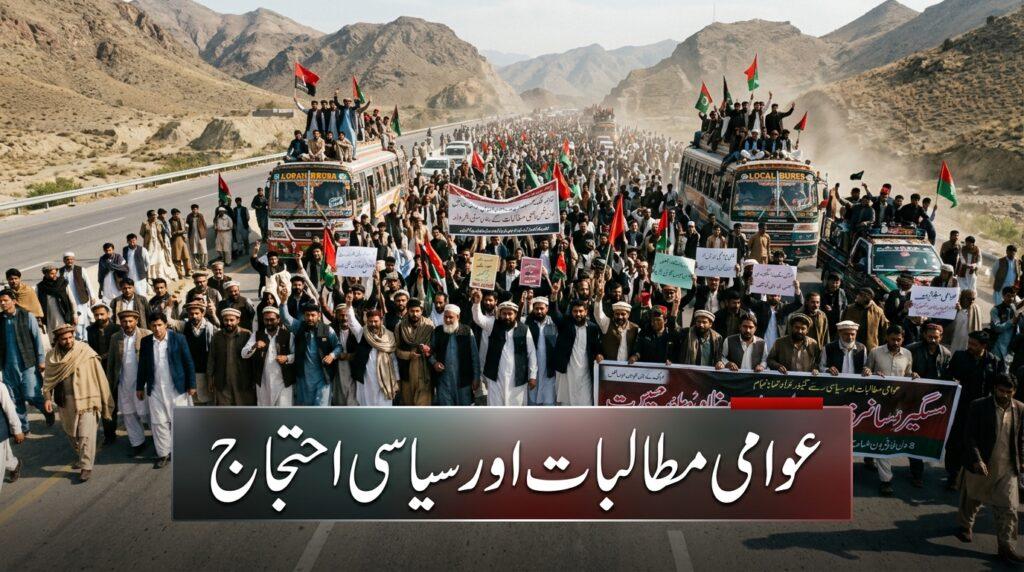
The immediate political objective identified in reporting was to demand the release of Imran Khan. However, the march took place against a wider background of disputes over the treatment of PTI’s leadership, counterterrorism policy, provincial representation and the relationship between the federal and provincial governments.
Demand for Imran Khan’s release
Imran Khan, a former prime minister and the founder of PTI, has been in prison since 2023 and faces multiple legal cases. PTI and its supporters argue that the cases and restrictions affecting him have damaged political competition and that he should be released. The party has challenged aspects of the legal proceedings and their political context.
The federal government’s position is that criminal cases and detention matters must be handled through the legal system. Political demonstrations do not themselves decide the outcome of a court case. The status of any particular case, sentence, appeal or bail application should be checked against up-to-date court reporting and official records.
Concerns about treatment and access in custody
PTI has also raised concerns about Khan’s treatment in custody, including access to appropriate medical care and contact with family members. Such concerns are separate from the broader demand for release: prison conditions, medical access, visitation and release are governed by different legal and administrative processes.
When reporting these claims, it is important to identify who made the allegation, whether the relevant authorities responded, and whether any court or independent body has issued a finding. A party statement should not be presented as a judicial determination.
Disagreement over counterterrorism policy
KP has faced militant violence, including attacks on civilians, police and security personnel. The provincial and federal governments have disagreed over the most effective approach to restoring security. PTI has opposed certain military operations and argued for consultation with provincial representatives and affected communities. Federal officials have criticised the provincial administration’s approach and stressed the need for coordination in counterterrorism efforts.
The dispute is not simply a disagreement over whether terrorism should be opposed. It concerns the strategy, the responsibilities of different levels of government, the role of security institutions, and the balance between enforcement, dialogue and local participation.
Provincial autonomy and the electoral mandate
PTI argues that KP’s elected representatives have a constitutional mandate to govern and that security policy should not be used to displace an elected administration. The federal government’s stated position is that provincial authorities must fulfil their constitutional responsibilities and cooperate with national security institutions.
These competing arguments make the crisis both political and constitutional. The central questions include whether the legal conditions for extraordinary measures were met, whether the required procedures were followed, and how elected institutions and courts should scrutinise the decision.
Further reading: Dawn’s report on Afridi rejecting governor’s rule and emergency.
3. Who led the march?
The protest march was led by Sohail Afridi, the chief minister of Khyber Pakhtunkhwa and a PTI leader. He addressed supporters at stops along the route and connected the protest to the demand for Imran Khan’s release. The route and planned schedule changed during the march, according to contemporaneous reporting.
It is useful to distinguish between the two political figures central to the story:
- Sohail Afridi: the KP chief minister who led the protest march.
- Imran Khan: PTI’s founder and former prime minister, whose release was a central demand of the march.
PTI chairman Barrister Gohar Ali Khan and other party figures have also been involved in the party’s response to the emergency and governor’s rule. Reports concerning the arrest or detention of individual leaders can change quickly, so their current status should be verified against fresh reporting and official court or police information before publication.
4. What were the protesters’ main demands?
Based on the reported purpose of the march and the wider political dispute, the key demands and objectives can be grouped as follows. Not every item is necessarily a formal written demand issued at the same time; the precise wording should be checked against PTI’s statements for the relevant date.
1. Imran Khan’s release
The principal demand reported in connection with the march.
2. Fair legal process
PTI disputes the political context of the cases and calls for relief through legal and political channels.
3. Appropriate custody conditions
The party has raised concerns about medical care and access for its imprisoned leader.
4. Provincial autonomy
PTI argues that the province’s elected representatives must retain their constitutional role.
5. Security-policy consultation
The provincial side has called for greater consultation over counterterrorism measures.
6. Opposition to governor’s rule
After the federal announcement, PTI rejected the extraordinary measures and questioned their legality.
These objectives are related but legally distinct. A demand for release is not the same as a challenge to governor’s rule. Medical access is different from a constitutional dispute over provincial authority. Each issue must be assessed under the relevant law and evidence.
5. Why did the federal government impose emergency and governor’s rule?
The federal government justified its action primarily by referring to the security situation and what it described as the provincial administration’s failure to cooperate adequately in the fight against terrorism. Dawn’s reporting on the cabinet’s decision described the federal government’s allegation as a “deliberate disengagement” from counterterrorism efforts.
The federal government’s stated position
Federal officials argued that the province faced serious security challenges and that stronger coordination was necessary between the provincial administration and federal security institutions. Their position was that constitutional responsibilities had to be fulfilled and that public safety required effective action against militant violence.
Federal officials also criticised the provincial government’s approach to counterterrorism and its position on dialogue with the Afghan Taliban. These are claims made by the federal side; reporting them does not, by itself, prove every allegation against the provincial administration.
PTI’s response
PTI rejected the federal government’s justification and argued that governor’s rule undermined the electoral mandate of KP’s voters. The party has said that it has not abandoned the fight against terrorism and has called for consultation, adequate resources and a security strategy that reflects the province’s circumstances.
PTI’s criticism focuses on provincial autonomy, the legitimacy of the federal action and the risk that security concerns could be used to weaken an elected provincial administration. The party has also indicated that it would consider legal and political ways to challenge the decision.
Why the competing accounts matter
In a constitutional democracy, the government’s stated reason for taking an extraordinary step is important, but it is not the only question. The legal basis, procedure, supporting record, parliamentary scrutiny and availability of judicial review also matter. Equally, opposition allegations must be evaluated against evidence rather than accepted automatically.
Readers should therefore distinguish three things: the official explanation for the decision, the opposition’s criticism, and independently established facts. A balanced article reports all three without presenting any party’s argument as a settled legal conclusion.
Sources: Dawn’s report on the federal cabinet’s decision · Radio Pakistan’s report on the announcement.
6. Who approved the measures, and who signed the documents?
It is important to distinguish the approval of a constitutional measure from the issuance of a separate administrative notification. The reporting available on 12 October describes the following decision-making process:
- President Asif Ali Zardari: approved the emergency and governor’s rule measures following the federal cabinet’s recommendation and on the advice of Prime Minister Shehbaz Sharif, according to official reporting.
- Prime Minister Shehbaz Sharif: chaired the federal cabinet meeting at which the KP situation was considered.
- Federal cabinet: recommended the extraordinary measures, citing its concerns about security and the provincial administration’s counterterrorism role.
- Interior Ministry: issued a separate statutory regulatory order authorising army deployment in aid of civil power under Article 245.
- Governor Faisal Karim Kundi: was identified in the deployment notification as the official who would determine the necessary number of troops and assets in consultation with the Military Operations Directorate at General Headquarters.
News reports establish the reported decision-making chain, but they are not a substitute for viewing every original signed proclamation or notification. Anyone publishing an image of a purported signed order should verify that the document is authentic and that its wording matches the official version.
7. What is governor’s rule?
“Governor’s rule” is a commonly used description for an extraordinary constitutional arrangement involving the exercise of provincial functions under Article 234. It is not a general permission for officials to disregard the Constitution. The actual legal effect depends on the wording of the proclamation and the limits and procedures established by the Constitution.
Article 234 concerns a situation in which the President is satisfied, on the basis specified by the Constitution, that the government of a province cannot be carried on in accordance with the Constitution. The article provides a framework for a proclamation and the exercise of specified provincial functions under the constitutional arrangement.
According to Radio Pakistan’s report of 11 October, Law Minister Azam Nazeer Tarar said that the provincial government led by the chief minister had ceased to exist under the announced arrangement and that the governor would exercise the relevant powers. The same report stated that an 11-member advisory council had been constituted and that a separate secretariat would handle the affairs of 12 districts.
Does governor’s rule permanently abolish a province?
No. Governor’s rule is not the abolition of Khyber Pakhtunkhwa as a province. It is an extraordinary constitutional arrangement whose operation, duration and legal limits must be assessed under Article 234 and the actual proclamation. Do not assume that every provincial institution or public service automatically disappears.
Governor’s rule is politically controversial because it affects the relationship between the federal government and an elected provincial administration. Supporters may argue that exceptional action is needed when constitutional government cannot function properly. Critics may argue that such action weakens representative government and provincial autonomy. The constitutional and factual merits of each argument require careful scrutiny.
8. Which constitutional articles are involved?
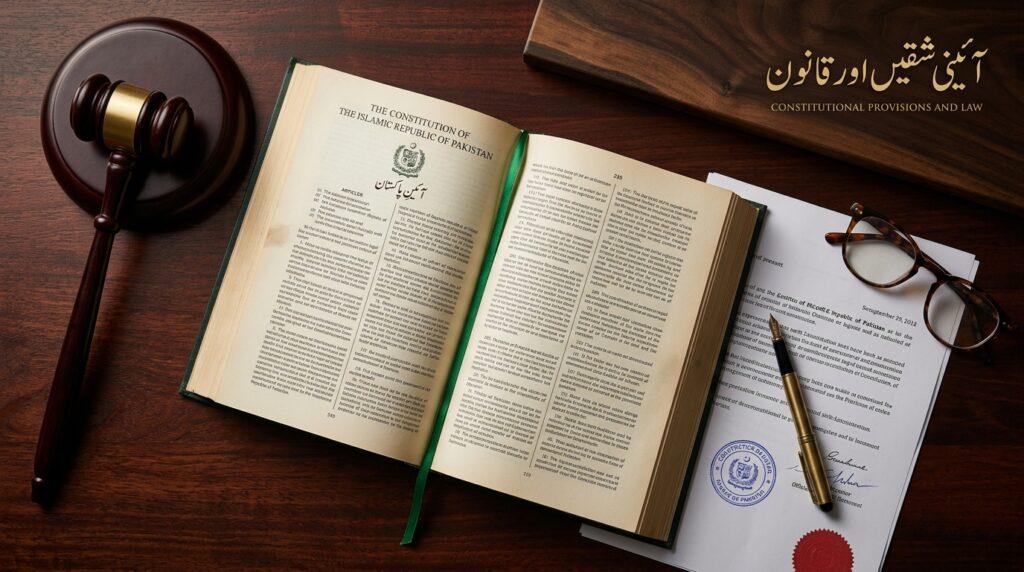
The central constitutional provisions identified in reporting are Articles 232, 234 and 245. Article 233 is also relevant to understanding emergency-related constitutional powers, but it should not be described as invoked in this case unless the official proclamation or reliable reporting establishes that fact.
| Constitutional article | General subject | What reporting says about KP |
|---|---|---|
| Article 232 | Proclamation of emergency in the circumstances set out in the Constitution. | Cited in the announcement of the emergency. |
| Article 233 | Certain emergency-related powers concerning the suspension of specified rights and the ability to seek judicial enforcement, subject to the article’s exact wording. | Do not claim it was invoked without checking the actual proclamation. Dawn’s emergency summary did not identify it as one of the provisions used for the announcement. |
| Article 234 | Provisions concerning failure of constitutional machinery in a province. | Cited in the announcement of governor’s rule. |
| Article 245 | Functions of the Armed Forces and their role in aid of civil power when called upon by the federal government. | Cited in the separate army deployment notification. |
Has any constitutional article been abolished? The reporting cited here describes the invocation of existing constitutional provisions; it does not say that Articles 232, 233, 234 or 245 have been abolished. The current Constitution and any applicable amendments remain the proper legal references.
Does an emergency automatically suspend every fundamental right? Do not make that assumption. The legal position depends on the specific constitutional provision, the terms of any proclamation or order, and the relevant judicial interpretation. Readers should consult the Constitution rather than rely on social-media summaries.
Primary legal source: National Assembly of Pakistan — official downloads, including the Constitution. Check the latest available constitutional text and amendments before quoting an article.
9. What does Article 245 mean for the army’s deployment?
Article 245 addresses the functions of the Armed Forces and their role in aid of civil power when called upon by the federal government. The phrase “in aid of civil power” describes military assistance to civilian authority under the applicable legal framework; it should not automatically be interpreted as meaning that the military has taken over every civilian function.
Dawn reported that the Interior Ministry’s notification authorised army troops and assets in KP for the safety of life, the security of persons and property, and the protection of government installations. The notification tied the authorisation to the duration of the emergency proclamation. It also stated that Governor Faisal Karim Kundi, in consultation with the Military Operations Directorate at General Headquarters, would determine the number of troops and assets required.
What the deployment announcement does—and does not—establish
- It establishes that the federal government authorised army personnel and assets to act in aid of civil power under Article 245.
- It identifies the stated purposes of protecting life, people, property and government installations.
- It does not, by itself, prove that every police responsibility has been transferred to the army.
- It does not establish that a new combat operation is taking place in every district of KP.
- The actual powers, deployment areas and operational arrangements must be checked against the notification and any subsequent official orders.
Read the deployment report: Dawn — Pakistan Army deployed in Khyber Pakhtunkhwa in aid of civil power.
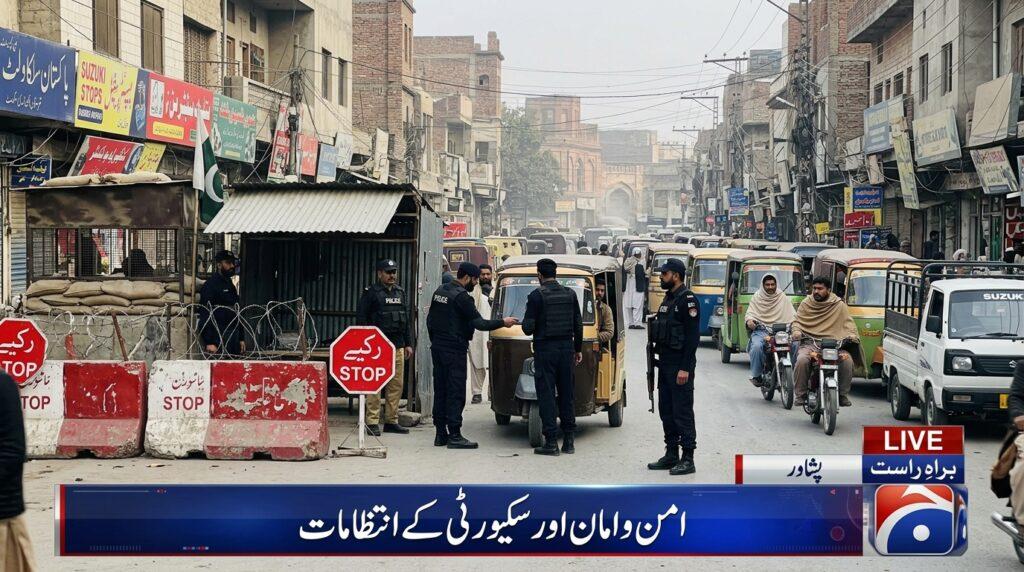
10. What security arrangements were reported in Peshawar?
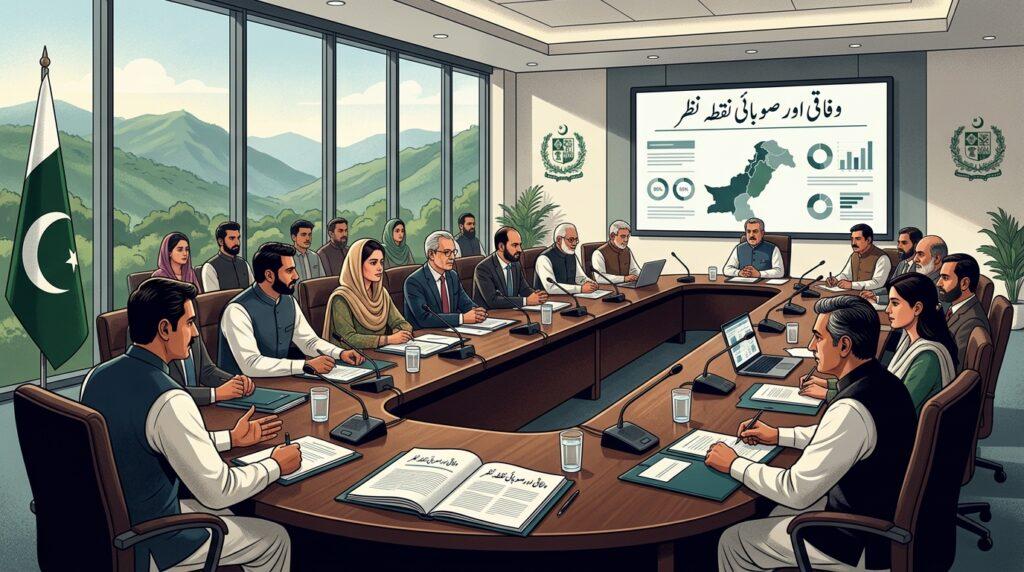
Dawn’s reporting described shipping containers placed at locations in Peshawar to restrict access to sensitive areas, increased police deployment near the Governor House and other government installations, and traffic diversions. The report also described communications disruptions in parts of the provincial capital.
Such measures can affect daily life, including commuting, business activity, education, access to government offices and communication with family members. However, a reported road closure or communications disruption in a particular area should not be treated as proof that the same restrictions apply throughout the province.
Residents should rely on current local advisories for road conditions and travel arrangements. Journalists and social-media users should also verify the date and location of photographs and videos before sharing them as evidence of current events. Old images can easily be misrepresented during a fast-moving political crisis.
11. What has the government done so far?
As reported on 11–12 October 2026, the principal measures and administrative developments include:
- Emergency announced: the President approved the federal cabinet’s recommendation for emergency measures under Article 232.
- Governor’s rule announced: Article 234 was cited in the announcement concerning the provincial government’s constitutional functions.
- Army deployment authorised: a separate Interior Ministry notification invoked Article 245 for deployment in aid of civil power.
- Administrative changes reported: the federal announcement included an advisory council under the governor and a separate secretariat arrangement for 12 districts.
- Chief secretary appointment reported: Dawn’s coverage of the decision identified Dr Muhammad Fakhr Alam Irfan as the new KP chief secretary.
- Security measures in Peshawar: news reports described roadblocks, container placements, traffic changes and increased police presence in sensitive areas.
- Opposition response: PTI and other opposition voices criticised the measures and indicated that they would pursue political or legal challenges.
These points describe the measures reported at the time of writing. They should not be read as confirmation that every arrangement has been implemented uniformly, or that no later legal or administrative changes have occurred.
12. What is the public reaction?
Public opinion cannot be reduced to a single position. Some citizens may prioritise a stronger response to militant violence and hope that the new arrangements improve security. Others may worry that governor’s rule weakens elected representation and provincial autonomy. Political parties, lawyers, civil-society organisations and residents may also disagree about the legality and likely effectiveness of the measures.
Radio Pakistan reported reactions from people in several cities who welcomed the decision and expressed hope for peace and stability. Because Radio Pakistan is a state broadcaster, readers should consider its institutional role when assessing how public opinion is represented. That report does not establish that all residents of KP support governor’s rule.
PTI rejected the federal decision, arguing that it undermined democratic representation. Other political figures and opposition voices also criticised the move. These reactions show that the announcement became a constitutional and political controversy as well as a security issue.
A reliable assessment of public opinion would require a broader range of reporting, transparent polling where available, and perspectives from different districts and communities. A handful of interviews or social-media posts cannot establish the views of an entire province.
13. What could be the effects on ordinary citizens?
The practical effects will depend on the scope, implementation and duration of the measures. Possible areas of concern include:
- Public safety: the stated objective of security measures is to protect people and installations, but residents need clear, accurate and timely guidance.
- Transport: roadblocks and diversions can delay commuters, patients, students, workers and intercity travellers.
- Communication: disruptions to mobile or internet services, where they occur, can interfere with work, education, banking and family contact.
- Education: security restrictions and travel difficulties may affect attendance and examinations. Students should follow verified notices from their own institutions.
- Business: uncertainty and transport disruption can affect shops, markets, deliveries and customer activity.
- Political participation: restrictions or arrests can affect the ability of parties and citizens to organise or attend political events; the legality of particular actions depends on the applicable law and facts.
- Public administration: citizens may need clear information about which offices are operating and which authority is responsible for a particular service.
These are potential effects, not a claim that every effect has already occurred in every district. Reliable local updates are essential to distinguish confirmed disruptions from speculation.
14. What should citizens do during the situation?
- Follow verified public-safety instructions from the relevant local authorities.
- Check road and transport conditions before travelling through affected areas.
- Keep essential phone numbers, medicines and necessary documents accessible.
- Verify breaking news through multiple credible sources before sharing it.
- Avoid restricted areas, security installations and confrontations.
- Use official education or workplace notices to confirm closures and schedule changes.
- Seek qualified legal advice if directly affected by an arrest, restriction or official order.
- Respect peaceful political expression and the safety of people with different views.
- Protect children and vulnerable family members from unnecessary travel or exposure to confrontations.
- Do not assume a rumour is true simply because it is widely shared or appears in a dramatic video.
15. What should people avoid doing?
- Do not spread unverified claims about deaths, arrests, troop movements or the suspension of constitutional rights.
- Do not encourage violence against protesters, police, military personnel, public officials or political opponents.
- Do not enter restricted areas or attempt to confront security personnel.
- Do not publish private personal information about alleged suspects, officials or protesters without a lawful and legitimate reason.
- Do not present old photographs or videos as if they were recorded during the current crisis.
- Do not treat a party allegation as a court finding or a government allegation as proven fact without corroboration.
- Do not assume that every resident of KP supports the same political position.
- Do not use the situation to promote ethnic, sectarian or political hatred.
16. What does the crisis mean for democracy and provincial autonomy?
Pakistan’s Constitution establishes a federal system in which authority and responsibilities are distributed between the federation and the provinces. Provincial autonomy is an important part of this arrangement, while the federal government also has constitutional responsibilities concerning national security and the functioning of the state.
The KP emergency raises questions about how extraordinary powers should be used, what evidence is required to justify them, and how federal and provincial authorities should resolve disputes. The issue cannot be decided solely by political slogans or by the fact that a government claims to be acting for security reasons.
Key questions include whether the relevant constitutional conditions were met, whether the correct procedures were followed, what the official proclamations actually authorise, what parliamentary oversight is required, and whether affected parties can seek judicial review. The answers require close reading of the Constitution, the original documents and any subsequent court rulings.
Democratic accountability also requires transparency. Citizens should be able to understand the legal basis for major decisions, the responsibilities of each institution and the safeguards available if powers are misused. Equally, provincial governments must be assessed on their own legal duties and performance rather than being exempt from scrutiny because they were elected.
17. Why is Khyber Pakhtunkhwa strategically important?
KP borders Afghanistan and includes districts that have experienced militant activity for many years. Security developments in the province are connected to wider regional conditions, border management, militant networks, policing, intelligence coordination and the everyday safety of local communities.
Residents of affected areas have direct stakes in decisions about security operations, negotiations, policing and public administration. The debate is therefore not only about federal-provincial relations. It is also about which policies are effective, how civilian harm can be prevented, and how communities can participate in decisions that affect their lives.
A sustainable security approach requires reliable evidence, effective law enforcement, coordination between institutions, protection for civilians, and accountability for misconduct. Political dialogue and public trust may also affect whether security measures are accepted and implemented effectively. The relative importance of each measure should be assessed against evidence rather than assumed in advance.
18. What happens next? Key developments to monitor
As the situation evolves, readers should watch for the following developments:
- Official legal documents: publication and scrutiny of the exact emergency proclamation, governor’s-rule notification and army deployment order.
- Parliamentary proceedings: any required presentation, debate, approval or other action under the Constitution.
- Court challenges: petitions, interim orders, hearings and judgments concerning the legality or scope of the measures.
- Administrative arrangements: how the governor, advisory council, chief secretary and district administrations carry out their responsibilities.
- Political leadership: verified information about the status of leaders, party plans and any negotiations.
- Security conditions: credible reports of attacks, policing activity and the impact on affected communities.
- Public services: verified information about transport, schools, offices, communications and other essential services.
Do not publish a prediction as if it were a confirmed outcome. Where the legal process or political response remains unresolved, say so and update the article when reliable new information becomes available.
Image copyright checklist
- Open the individual image page and check its licence.
- Follow attribution requirements and retain the creator’s name and licence information where required.
- Do not assume every image returned by a search engine is free to reuse.
- Use captions such as “file photo” or “illustrative image” when appropriate.
- Never alter a generic image in a way that falsely presents it as evidence of a real event.
19. Frequently asked questions (FAQs)
Why was emergency rule announced in KP?
The federal government cited security concerns and alleged shortcomings in the provincial administration’s counterterrorism efforts. PTI rejected the justification and criticised the decision as an attack on provincial autonomy.
Who approved emergency and governor’s rule?
Official reporting said President Asif Ali Zardari approved the federal cabinet’s recommendation on the advice of Prime Minister Shehbaz Sharif. Refer to the original proclamations for the precise legal wording.
Who led the PTI long march?
The march was led by KP Chief Minister Sohail Afridi, with the release of Imran Khan identified as a central demand.
What was the main demand of the march?
The main reported demand was Imran Khan’s release. The protest also took place amid broader disagreements over security policy, provincial autonomy and political representation.
Which constitutional articles were cited?
Articles 232 and 234 were cited for the emergency and governor’s-rule measures. Article 245 was cited in the separate notification authorising army deployment in aid of civil power.
Was Article 233 invoked?
The emergency summary cited here identified Articles 232 and 234. Dawn’s reporting said Article 233 was not mentioned in that summary. Do not describe Article 233 as invoked unless the official proclamation or later reliable reporting confirms it.
Have constitutional articles been abolished?
The cited reports describe the use of existing constitutional provisions. They do not report that Articles 232, 233, 234 or 245 have been abolished.
Has the army taken over all civilian functions?
The reported notification authorises the army to act in aid of civil power. The notification alone does not establish that every civilian function has been transferred to the military.
Does emergency rule automatically suspend every fundamental right?
No such blanket conclusion should be drawn without examining the Constitution, the actual orders and any relevant court decisions. The legal effect depends on the specific provision and action taken.
How can CSS and PMS candidates use this topic?
Study emergency powers, federal-provincial relations, Article 245, provincial autonomy, counterterrorism policy, fundamental rights, parliamentary oversight and judicial review. Use the official constitutional text and multiple reliable news reports to separate legal facts from political claims.
20. Sources and further reading
The following links were checked as relevant sources for the reported developments and constitutional background. News reports can be updated or corrected after publication, so open the articles directly before citing them in a later update.
- Dawn — Pakistan Army deployed in Khyber Pakhtunkhwa in aid of civil power
Army deployment notification, Article 245, stated objectives and security arrangements in Peshawar. - Dawn — Emergency, governor’s rule imposed in KP as president approves cabinet decision
Federal cabinet decision, constitutional articles and initial political response. - Dawn — CM Afridi says he will not accept governor’s rule or emergency
Provincial chief minister’s position before the announcement. - Radio Pakistan — President promulgates emergency and governor’s rule in KP
Officially reported announcement and administrative arrangements. - Reuters — Pakistan imposes emergency rule over Imran Khan’s provincial government
Independent international reporting on the emergency, security rationale and political reaction. - Associated Press — Pakistani president suspends provincial government led by Khan’s party ahead of march
International reporting on the emergency and the political context. - National Assembly of Pakistan — official downloads
Official source for the Constitution of Pakistan and other parliamentary documents. - Press Information Department, Government of Pakistan
Official government press releases and statements. - Wikimedia Commons — Peshawar image search
Potential images; verify the individual licence and attribution requirements.
21. Conclusion
The developments in Khyber Pakhtunkhwa represent a serious political and constitutional challenge for Pakistan. A PTI protest march led by Chief Minister Sohail Afridi called for Imran Khan’s release and took place amid wider disagreements over security policy, federal-provincial relations and provincial autonomy.
On 11 October 2026, the federal government announced emergency and governor’s rule under Articles 232 and 234 following approval by President Asif Ali Zardari on the federal cabinet’s recommendation. A separate Interior Ministry notification authorised army troops and assets to act in aid of civil power under Article 245.
The government says its actions are justified by security and governance concerns. PTI rejects that justification and argues that the measures undermine the province’s elected mandate. The legality and implications of the decisions must be assessed through the actual constitutional documents, applicable procedures, parliamentary scrutiny and any court proceedings—not through political claims alone.
For ordinary citizens, the immediate priorities are safety, reliable information and access to essential services. For students and competitive-examination candidates, the crisis provides a case study in constitutional emergency powers, provincial autonomy, civil-military relations, counterterrorism policy and democratic accountability.
As new information emerges, this article should be updated with verified developments and links to official documents. In a fast-moving situation, accuracy, clear attribution and transparent corrections are more valuable than publishing unconfirmed claims quickly.
Editorial note
This article is an informational current-affairs explainer, not legal advice. Constitutional interpretations should be checked against the Constitution of Pakistan, the relevant official proclamations and applicable court decisions. Political allegations are attributed to the parties or officials making them and should not be treated as judicial findings. The article reflects information available on 12 October 2026.